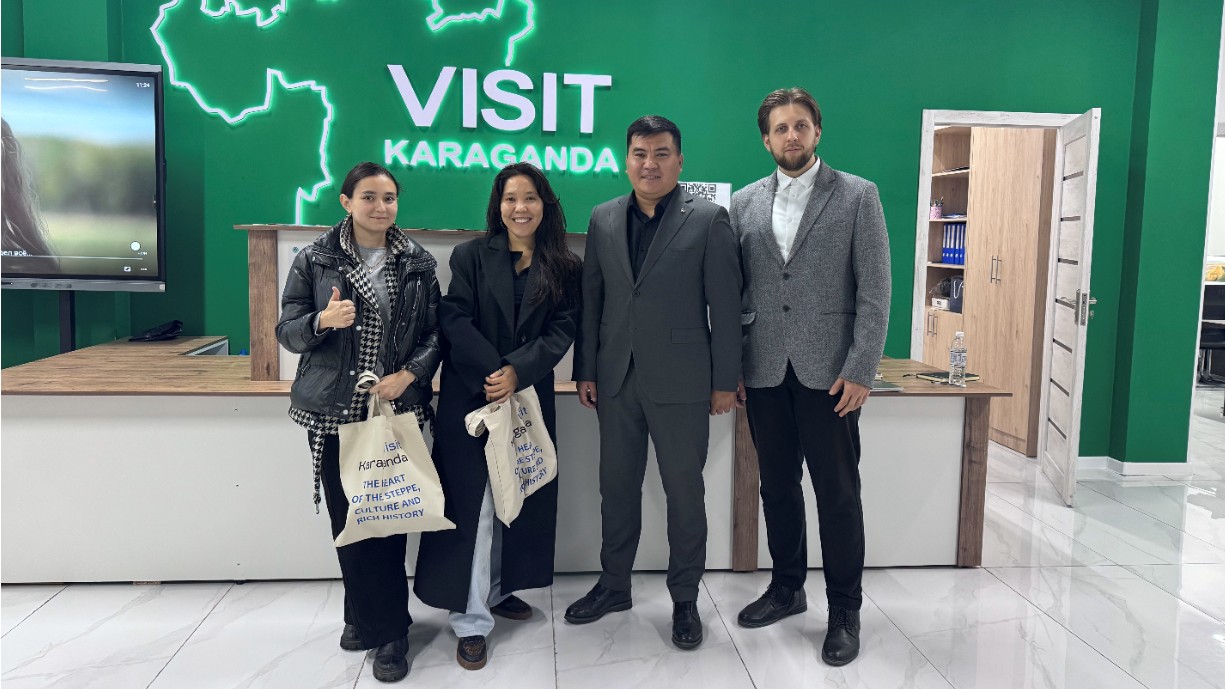
Dec 18Certified guides are being trained in the Karaganda region
Professional guide training has launched in the Karaganda region. The program is aimed at developing domestic tourism, improving the quality of excursion services, and forming a professional environment. Over the course of five days, 14 participants—active guides, travel company employees, and regional residents planning to work in the tourism sector—underwent training. Upon completion of the course, they all received certificates.
Today, travel agencies in the Karaganda region are primarily focused on outbound tourism. The domestic market is developing separately, and there are currently few certified specialists. Meanwhile, it is the guide who forms a tourist's first impression of the region.
To change this situation, the Tourism Department, together with the Tourist Information Center and supported by specialized organizations and experts, organized special training to obtain certification.
"A guide is the face of the region. What tourists see and remember depends on how the material is presented," notes Irina Lyubarskaya, head of the Tourism Department. "This year, the region welcomed guests from CIS countries, China, Germany, Finland, and France. Certification ensures safety and well-organized routes, high-quality excursions, and an accurate presentation of history. This leads to an influx of tourists and income growth for local businesses."
The training program covers the history and culture of the region, excursion techniques, working with different categories of tourists, basics of ethics, safety and first aid, communication, and route promotion. Theoretical lessons are combined with practice. Training is conducted by certified specialists from Almaty and guest lecturers from abroad.
"Being a guide is a complex profession. A person must possess immense erudition, charisma, and the ability to work with an audience," says trainer and excursion guide Zhanar Gabit. "We teach how to handle crisis situations, understand the psychology of tourists, present knowledge beautifully, and manage time."
The course concludes with an exam and the awarding of a certificate. It is no longer possible to work as a guide without one—this is a legal requirement.
"I want to work officially and scale my activities. For cooperation with tour operators, a certificate and registration in the registry are mandatory," shares project participant Damir Karimov. "In these courses, we get to know each other, exchange experiences, and learn to see each other as partners rather than competitors."
New tourist routes are also being developed in the region in cooperation with the visitor center and specialized associations. They cover the cultural and natural sites of the province. There are plans to implement QR codes in hotels and hostels, allowing tourists to choose excursions and contact certified guides through the tourism center. Similar training seminars for guides are planned to continue next year.